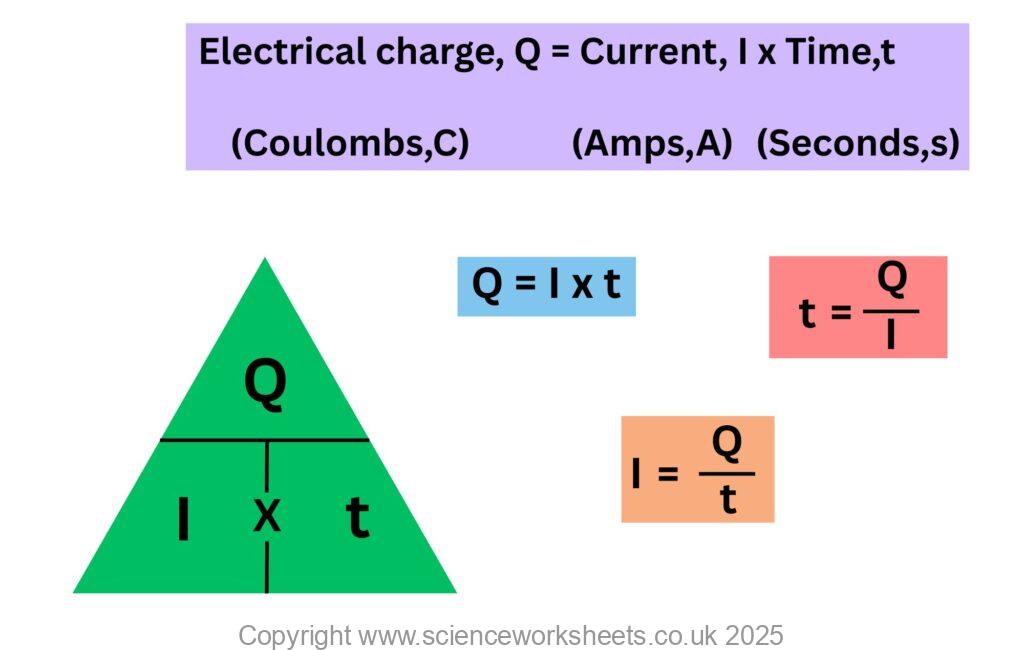
Electric Current
Electric current is the flow of charge around a circuit.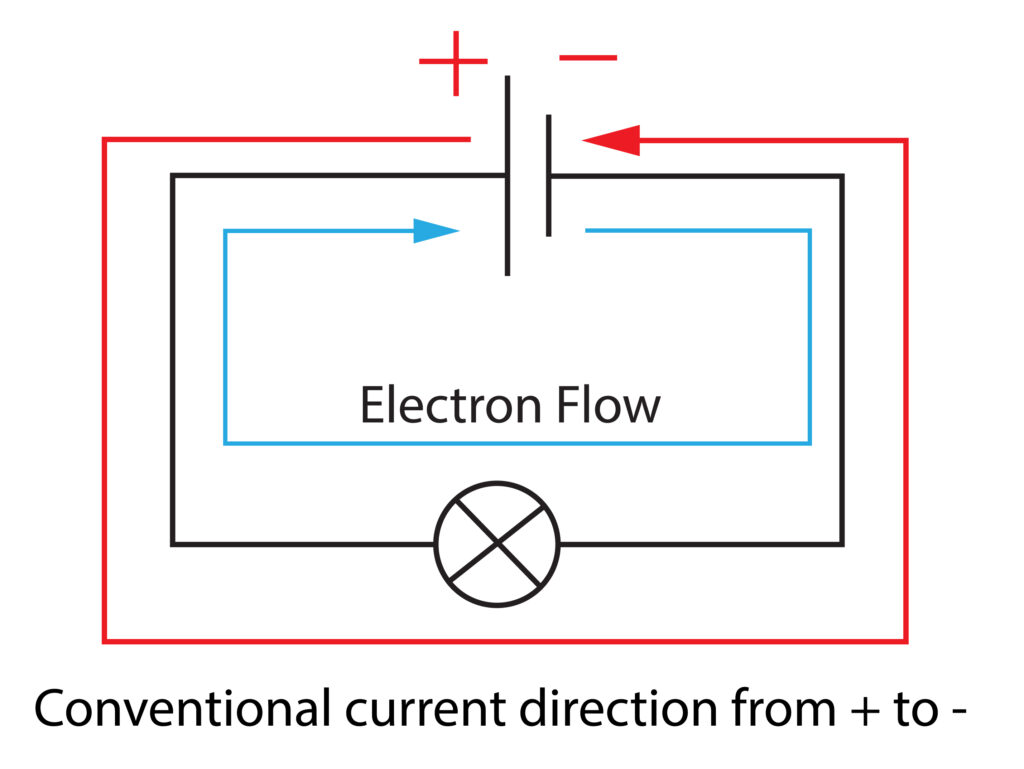 The cell or battery of a circuit makes these charges flow around the circuit. Conventional current flow is from positive to negative, electron flow however is from negative to positive.
(There is a reason for the difference, but you don’t need to know it!)
The cell or battery makes the charges flow around the circuit, the potential difference or voltage provides the energy to push and pull the charges to flow around the circuit.
Electric current is the flow of charge around a circuit.
The cell or battery of a circuit makes these charges flow around the circuit. Conventional current flow is from positive to negative, electron flow however is from negative to positive.(There is a reason for the difference, but you don’t need to know it!)
The cell or battery makes the charges flow around the circuit, the potential difference or voltage provides the energy to push and pull the charges to flow around the circuit.
Metallic Structure
Metallic structure is a giant structure made up of positive metal ions and delocalised electrons. These delocalised electrons (free electrons) are able to move through the structure, carrying charge.
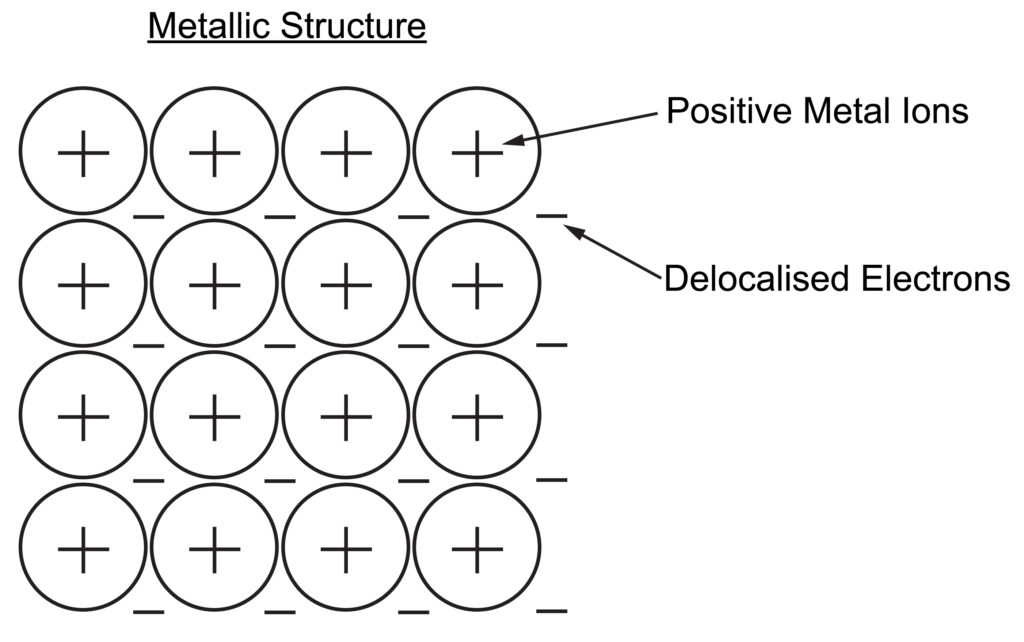
Metallic structure is a giant structure made up of positive metal ions and delocalised electrons. These delocalised electrons (free electrons) are able to move through the structure, carrying charge.