AQA GCSE Alternating and Direct Electrical Circuits (Combined Science)

YouTube video

This video is hosted by YouTube (Google). Allow Optional functionality in Cookie settings to load it. YouTube may then store or access information on your device and receive information about your visit.

Alternating and Direct Circuits

Circuits are either classed as alternating, or direct. 

A circuit can have either:

1.Direct potential difference and Direct current

2.Alternating potential difference and alternating current

Direct

A direct potential difference is in one direction only.

This means that when the power source provides a direct potential difference a direct current will flow, this means that the current flows in only one direction around the circuit.

conventional current circuit diagram, showing the direction of conventional current

The direct current will flow from the positive terminal of the cell to the negative terminal of the cell. 

Note the design of the cell terminals, compare to the alternating one below

An oscilloscope can be used to illustrate a direct potential difference and direct current  
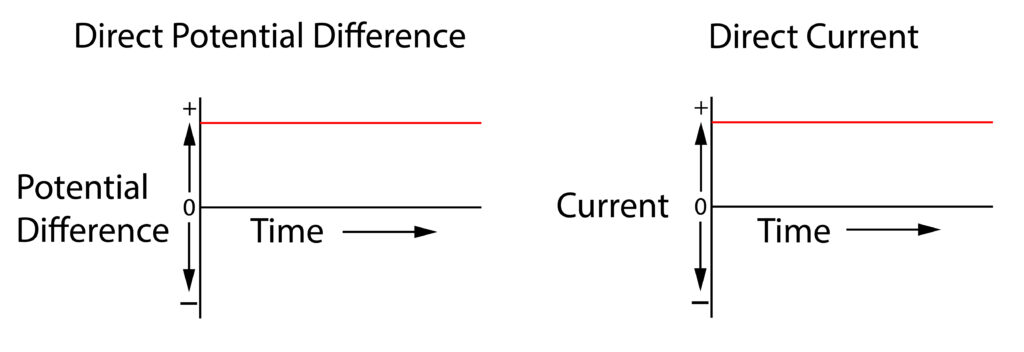
Direct potential difference and direct current as viewed on an oscilloscope

Sources of direct current for an electrical circuit would be a cell or battery. 

Alternating

An alternating potential difference will continuously changes its direction. 

An alternating potential difference will cause an alternating current to flow in a complete circuit.

An alternating current will continously change direction. 
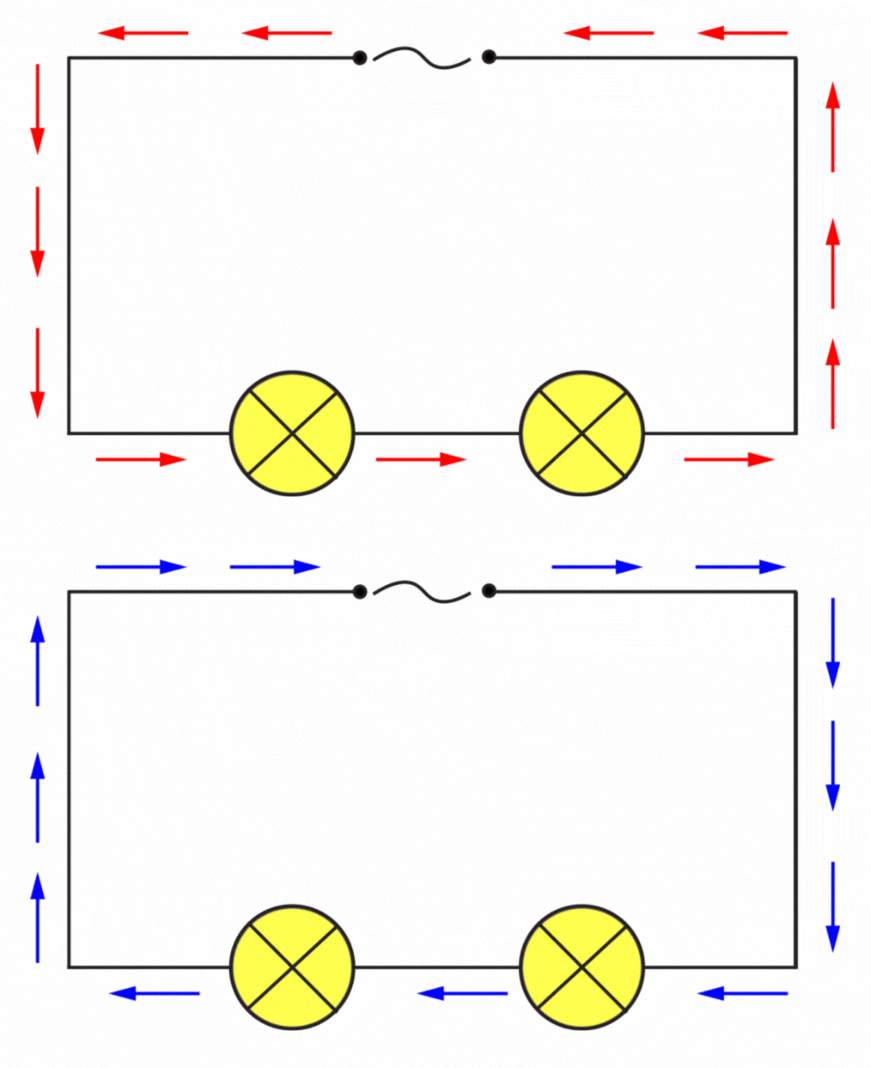
AC and DC

In the diagram above notice how the terminals have changed. 

An oscilloscope can be used to show an alternating potential difference and alternating current
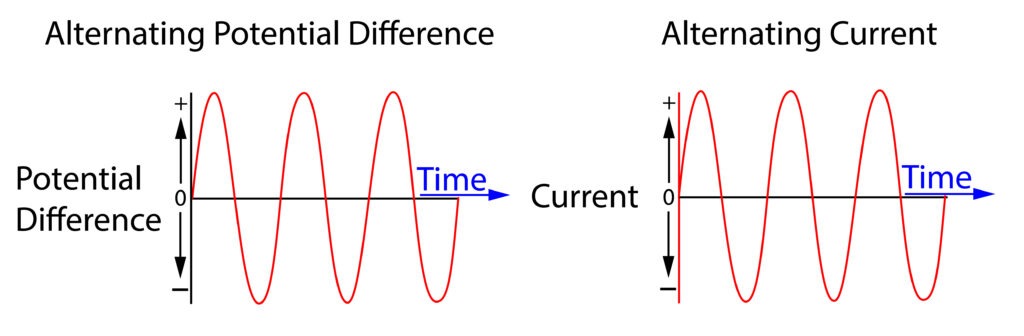
oscilloscope display to show alternating potential difference and alternating current

Sources of alternating current include generators and mains electricity

Practice Questions

1.Draw the circuit symbol to represent the  terminals for:

(a)Circuit that has a direct potential difference


(b)Alternating potential difference

2. State two sources of:

(a) direct potential difference


(b)Alternating potential difference


3. State the name of the device which can be used to graphically show a direct current, or direct potential difference.

Cookie preferences

Optional categories start off. You can change your choice at any time using Cookie settings.

Withdrawing consent reloads this page to stop previously loaded optional scripts. Unsaved form entries may be lost.

Cookie purposes and service details