AQA GCSE Chromosome structure (Biology)
This video is hosted by YouTube (Google). Allow Optional functionality in Cookie settings to load it. YouTube may then store or access information on your device and receive information about your visit.
Chromosome Structure
Chromosomes are made up of DNA.
1 DNA molecule = 1 Chromosome
In a Eukaryotic cell (animal or plant cell) the chromosomes are found within the nucleus of the cell.
The chromosome carries genes. So a gene is a short length of DNA that codes for a protein.
A typical human body cell will contain 23 pairs of chromosomes, or 46 individual chromosomes. The chromosomes are in pairs because one of each pair came from the father and the other chromosome came from the mother.

Chromosomes and cell division.
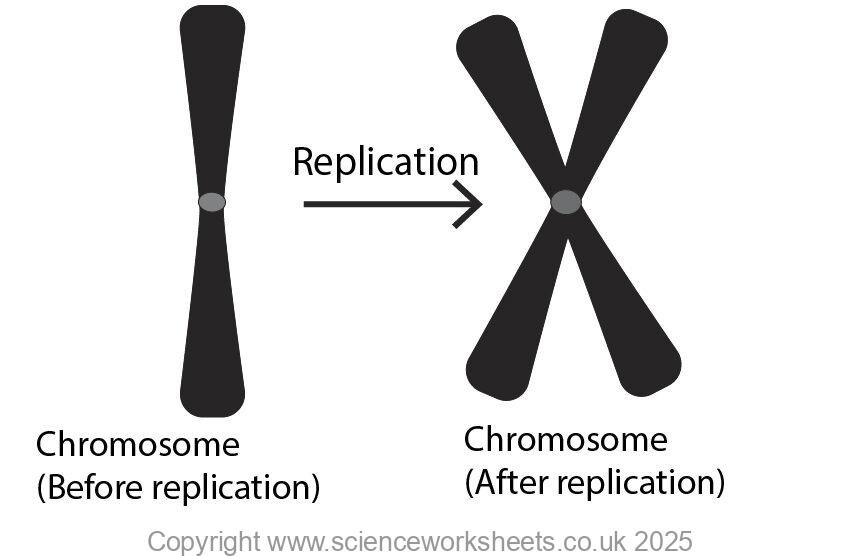
In order for a cell to divide the genetic material must be replicated.
Below is a diagram showing how the DNA in the chromsome is replicated.
Practice Question
1.Where, within a eukaryotic cell is the DNA found?
2.Define the term gene
3. How many pairs of chromosomes does a human cheek cell have?
4. Why are human chromosomes in pairs?
Factors affecting the rate of photosynthesis
Measuring & calculating rates of photosynthesis
Inverse square law and photosynthesis
Economics of enhancing the conditions in greenhouses
Investigating the effect of light intensity on the rate of photosynthesis
Data analysis and nervous system
The effect of a factor on human reaction time
Controlling blood glucose concentration
Regulating water and nitrogen levels in the body.
Hormones and human reproduction
Using hormones to treat infertility
Control and coordination in plants using hormones
Investigating the effect of light or gravity on the growth of newly germinated seedlings