Linear force-extension graphs
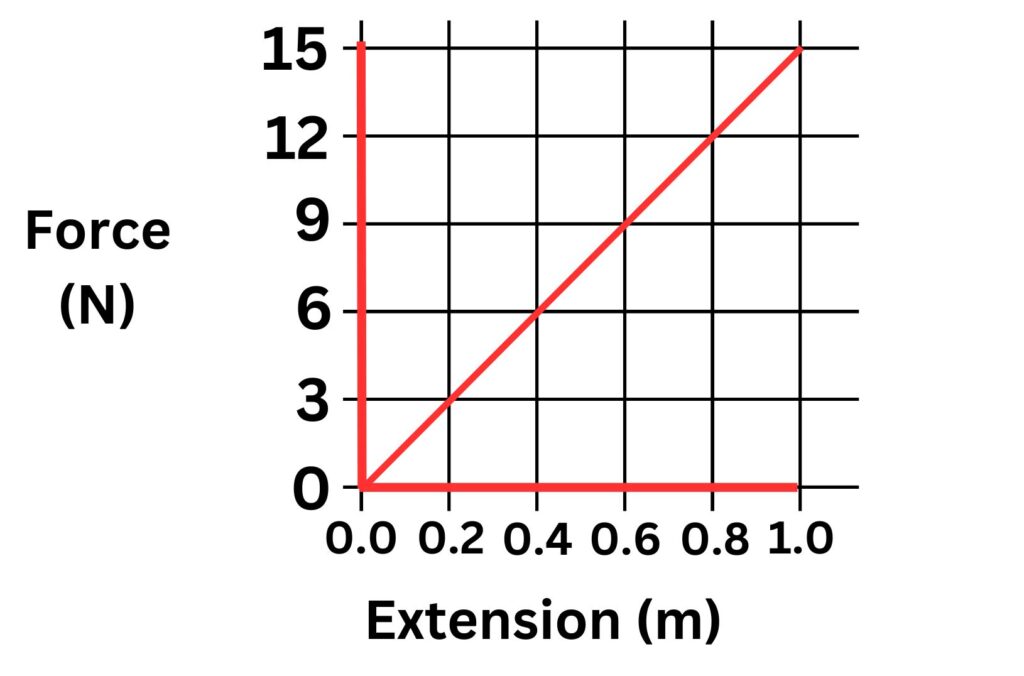
A linear Force extension graph is one that will obey Hooke’s Law.
Hooke’s law states that:
The extension of an elastic object, is directly proportional to the force applied, provided that the limit of proportionality is not exceeded.
An example of a linear force extension graph is shown below:
Non linear Force-extension graph
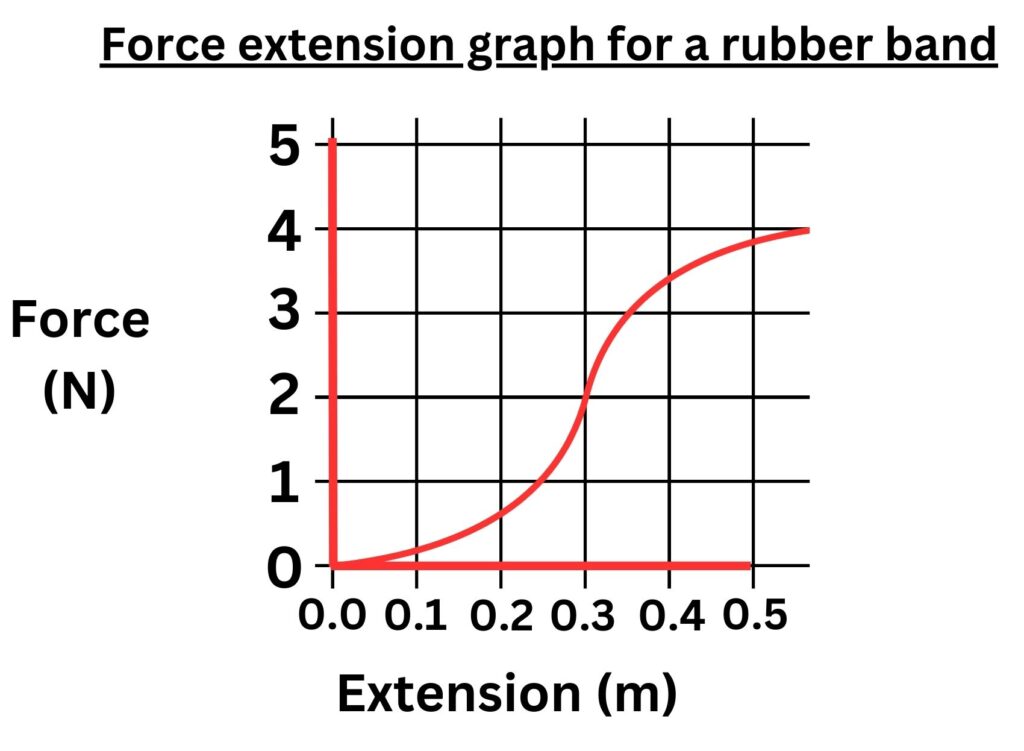
A non linear force extension graph will not follow Hooke’s law. This means that the graph line will be curved and not straight.
An example of a non linear force extension graph is shown below:
Practice Questions
1.Describe the difference between a force extension graph that is linear, vs one that is non linear.
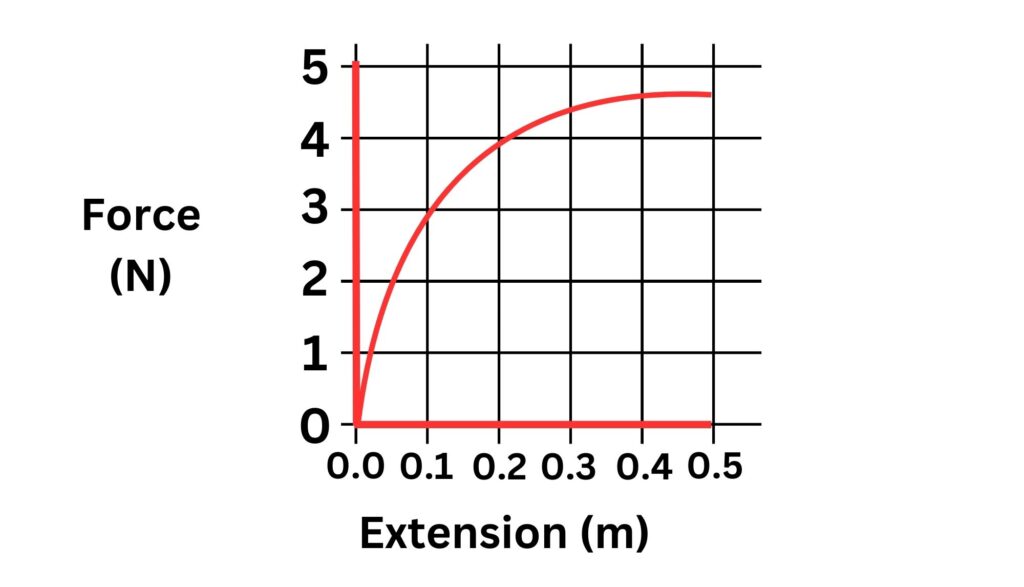
2.Is the following graph representative of linear or non linear?
3. Would the following data produce a graph that is linear or non linear?