AQA GCSE Feedback systems in the body(Biology)
Feedback systems
Hormones are chemical messengers. Two important ones for this topic are adrenaline and thyroxine. They affect how our body reacts to stress and controls metabolism.
Adrenaline – the fight or flight hormone
Adrenaline is produced by the adrenal glands when the person experiences fear or stress.
Adrenaline will increase heart rate, this will deliver more oxygen and glucose to muscle cells, to prepare the body for the fight or flight response.
The additional oxygen and glucose supplied is used by the muscles in respiration to release energy for muscle contraction during the fight or flight response.
Adrenaline does not use a negative feedback system.
Thyroxine – controlling metabolism
Thyroxine is a hormone produced by the thyroid gland. Thyroxine controls the body’s basal metabolic rate, this is how quickly the body uses energy at rest.
Thyroxine is important for growth and development.
The level of thyroxine is controlled by a negative feedback system.
Negative feedback systems
Negative feedback is a control system that keeps conditions in the body stable by reversing any change. If a level becomes too high, the body acts to lower it. If it becomes too low, the body acts to raise it.
If a value deviates from a set point, this change is detected by a receptor.
A control centre will process the information and coordinate a response.
An effector will bring about a response to restore the value back to the set point
Once the set point is restored the correcting mechanism is shut down until it is needed again.

Thyroxine and negative feedback
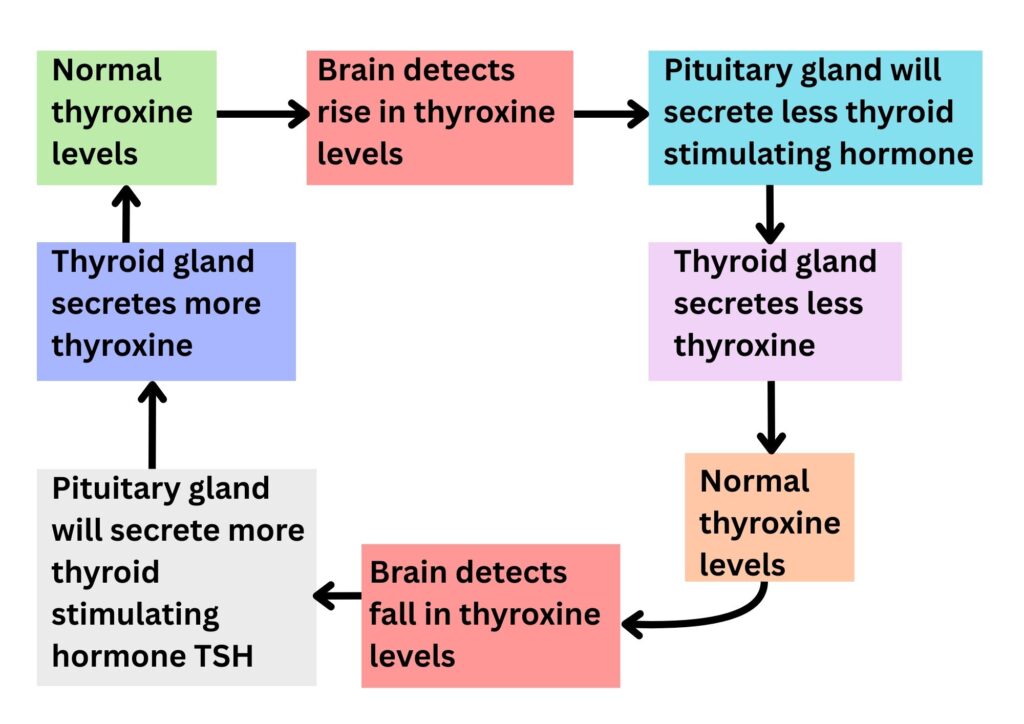
The level of thyroxine in the body is controlled using a negative feedback mechanism.
Thyroxine is a hormone made by the thyroid gland. It controls the body’s metabolic rate, which is how quickly the body uses energy. Thyroxine is important for normal growth and development.
TSH (thyroid-stimulating hormone) is made by the pituitary gland in the brain. TSH controls how much thyroxine the thyroid gland releases.
If thyroxine levels are too low, the pituitary gland releases more TSH. This causes the thyroid gland to release more thyroxine.
If thyroxine levels are too high, the pituitary gland releases less TSH. This causes the thyroid gland to release less thyroxine.
This process is called negative feedback and helps keep hormone levels stable.
Practice Questions
1.Describe what could happen if a person does not produce enough thyroxine.
2.Explain why negative feedback is important in the body.
3.Describe two effects adrenaline has on the body.
Factors affecting the rate of photosynthesis
Measuring & calculating rates of photosynthesis
Inverse square law and photosynthesis
Economics of enhancing the conditions in greenhouses
Investigating the effect of light intensity on the rate of photosynthesis