AQA GCSE Controlling blood glucose concentration (Biology)
Controlling blood glucose concentration.
Blood glucose concentration is monitored and controlled by the pancreas using hormones.
These hormones Insulin and glucagon are secreted directly into the bloodstream.
Why blood glucose must be controlled?
Glucose is needed for cellular respiration
Blood glucose concentration must be kept within narrow limits
If the blood glucose levels are too high, water moves out of the cells by osmosis, cells shrivel up.
If the blood glucose concentration is too low, there is not enough glucose for respiration.
Hormone Insulin.
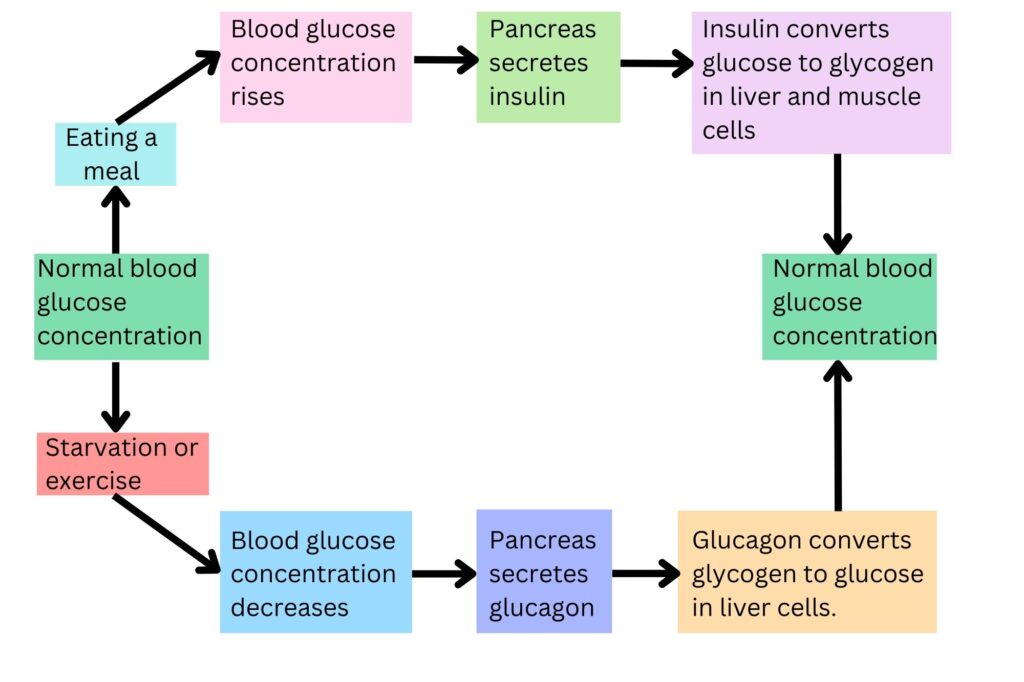
After eating a meal, the pancreas will detect a rise in blood glucose level, in response it will secrete the hormone insulin into the blood.
Insulin causes glucose to move from the blood into cells. In liver and muscle cells, excess glucose is converted to glycogen for storage.
Blood glucose level falls back to normal.
Hormone Glucagon.
When blood glucose falls too low:
1.Blood glucose concentration decreases
2.Pancreas secretes glucagon into the blood
3.In liver cells glycogen is converted into glucose and the glucose is released back into the blood.
4. Blood glucose concentration rises back to normal.
Negative feedback cycle
Negative feedback is when a change in the body is reversed to restore normal conditions.
Insulin and glucagon work in opposite directions. This keeps blood glucose concentrations relatively stable.
Diabetes
Diabetes is where the blood glucose concentration is not controlled.
There are two types of diabetes:
Type 1 diabetes
Type 2 diabetes.
Type 1 diabetes
Type 1 diabetes is caused by the pancreas not producing enough insulin.
As a result of type 1 diabetes it leads to high blood glucose concentration
Type 1 diabetes usually develops in childhood
Risk factor: genetics
Treatment:
1.Insulin injections
2.Controlled diet (restricted carbohydrate)
Type 2 Diabetes.
Insulin is still secreted by the pancreas, but the body cells do not respond properly to insulin
Type 2 diabetes is more common in adults
Risk factor: obesity
Treatment:
1.Carbohydrate-controlled diet
2.Regular exercise
3.Sometimes medication if diet and exercise measures are not effective enough.
| Feature | Type 1 diabetes | Type 2 diabetes |
|---|---|---|
| Insulin produced | No/very little | Yes |
| Cell response to insulin | Normal | Reduced |
| Onset | Childhood | Adulthood |
| Risk factor | Genetic | Obesity |
| Treatment | Insulin injections | Diet and exercise, in some cases medication |
Data analysis.
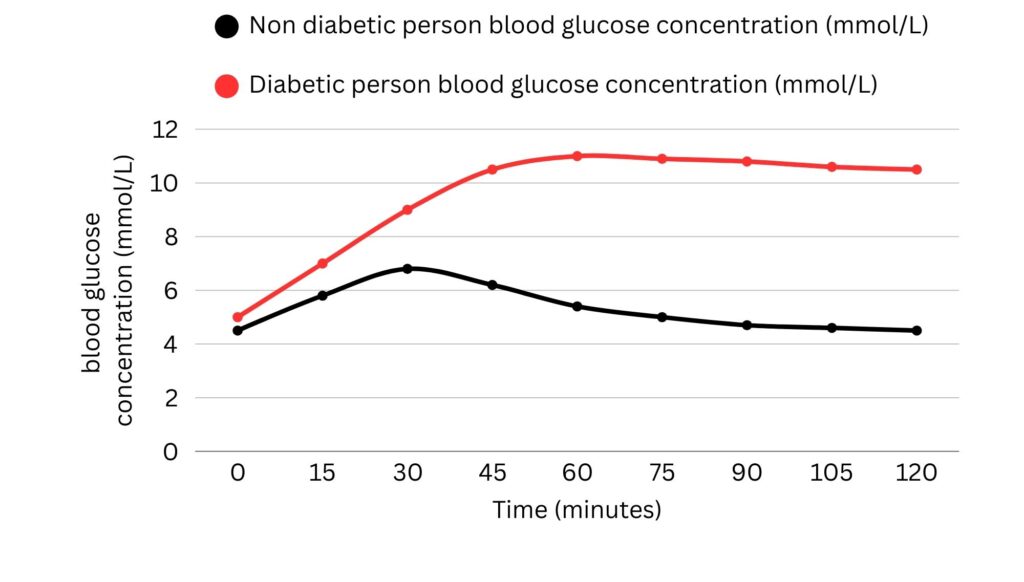
Below is a graph of blood glucose concentration vs time after eating a meal for a diabetic person vs a non diabetic person.
Lets use the graph above to answer some questions:
Describe questions means observations only, no reasons.
1. Non-diabetic person after a meal:
The blood glucose concentration rises after the meal, then gradually falls back to normal over time.
2.Diabetic person after a meal:
The blood glucose concentration rises after a meal and then stays high.
Compare questions (mention both lines).
Sentences could include:
Both groups, or a clear comparative phrase such as:
“Higher than”, “Lower than”, “Rises more quickly”, “Takes longer to return to normal”
For example:
In the non-diabetic person, blood glucose rises and then returns to normal.
In the diabetic person, blood glucose rises to a higher level and remains high for longer.
The diabetic person’s blood glucose falls more slowly than the non-diabetic person.
EXPLAIN questions:
Use biological knowledge to explain the changes!
After a meal, the blood glucose concentration decreases in the non diabetic person. Explain why.
Insulin causes glucose to move from the blood into cells.
Excess glucose is converted to glycogen in the liver and muscles, which lowers blood glucose concentration.
Practice Questions
1.Explain how insulin lowers blood glucose concentration
2.Name the storage form of glucose in liver and muscle cells.
3.Explain why people with Type 2 diabetes may need a controlled diet and regular exercise.
Factors affecting the rate of photosynthesis
Measuring & calculating rates of photosynthesis
Inverse square law and photosynthesis
Economics of enhancing the conditions in greenhouses
Investigating the effect of light intensity on the rate of photosynthesis