AQA GCSE Variation(Biology)
Variation
Variation means the differences in characteristics between individuals of the same species.
For example:
Humans have different heights, eye colours, and blood groups
Plants may have different leaf sizes or flower colours
Variation is due to:
1. Genetic differences (inherting different genes)
2. Environmental causes (developing in different environments)
3. A mixture of genetic and environmental causes.
Genetic causes
These are caused by the genes you inherit from your parents.
Examples:
Eye colour
Blood group
Genetic disorders
There is usually a lot of genetic variation within a population
Environmental causes
These are caused by conditions around you.
Examples:
Diet affects weight
Sun exposure affects skin colour
Education affects language skills
Combination of both
Most characteristics are influenced by both genes AND environment.
Examples:
Height (genes + nutrition)
Body mass (genes + diet/exercise)
How our genome can determine our phenotype.
The genome is all the genetic material (DNA) in an organism.
The phenotype is the observable characteristics of the organism.
The genome and its interaction with the environment influence the development of the phenotype.

Mutations and Variation
A mutation is a random change in the DNA base sequence.
Mutations happen all the time (continuously)
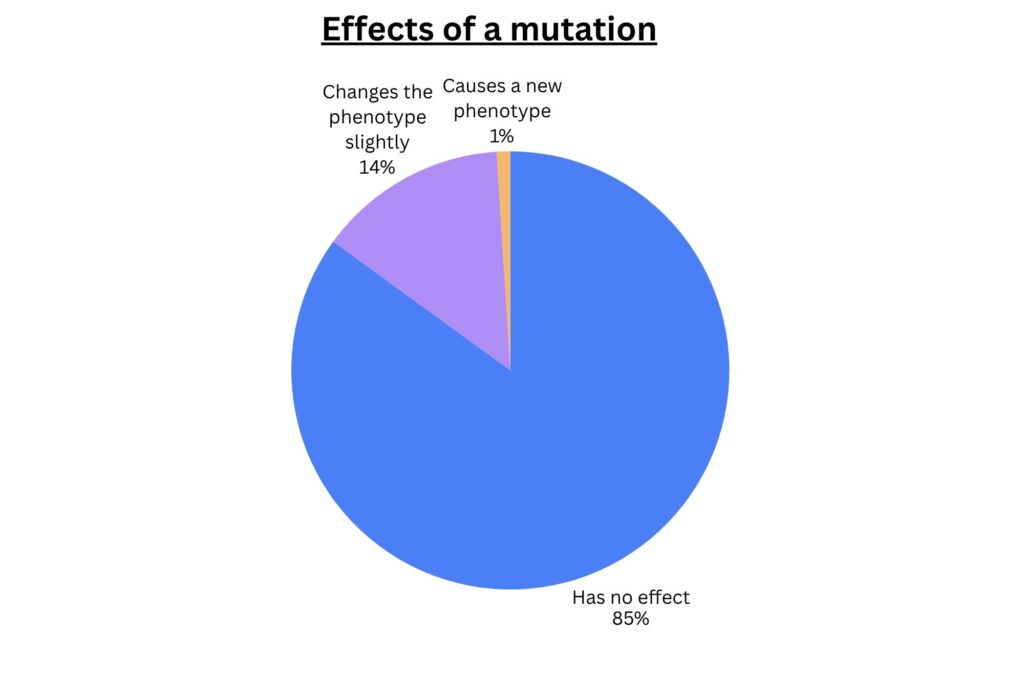
Most mutations have no effect.
Some mutations change the phenotype slightly
Very few mutations cause a new phenotype
Mutations and evolution
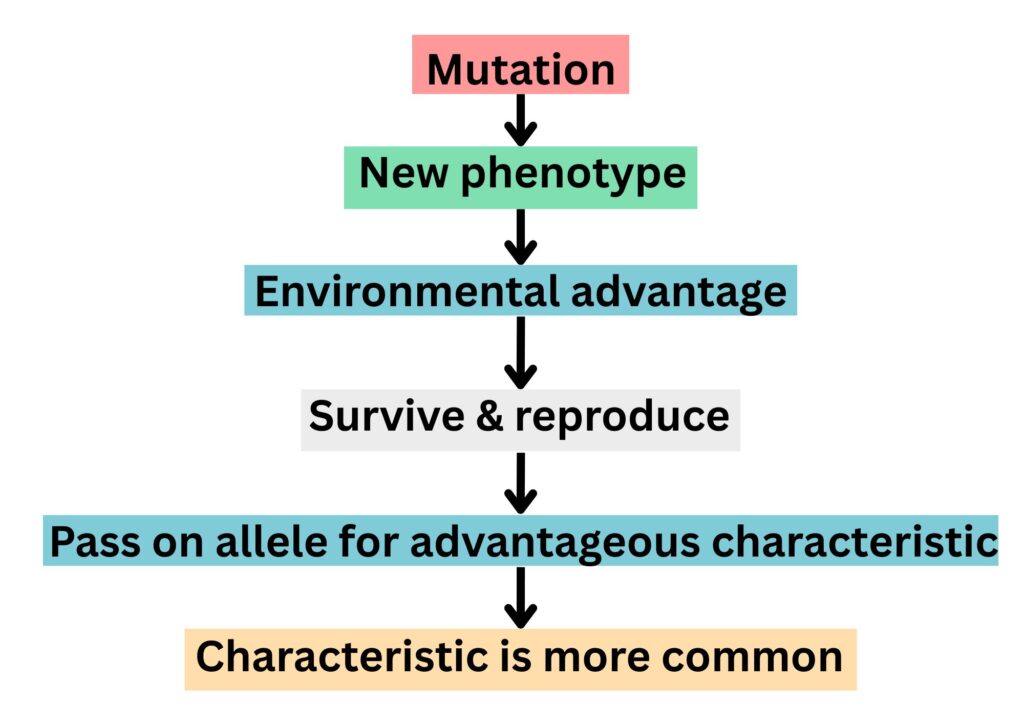
Mutations sometimes create a new phenotype (a new characteristic).
If the environment changes, a mutation may give an organism an advantageous characteristic. If this happens it means the organism is more likely to survive and reproduce.
As a result:
-the organism passes the allele for the advantageous characteristic on to its offspring
-more individuals in the population inherit this allele for advantageous characteristic
-over time, the mutation becomes more common
This can cause a rapid change in the species.
Real life example
The peppered moth shows how variation can lead to changes in a species.
There are two forms of this moth:
- a light (white) form
- a dark form
These differences are caused by a mutation, which created a new phenotype (dark colour).

Before environmental change
Originally, tree bark was light-coloured.
Light moths were camouflaged
Dark moths were easily seen by predators (birds)
Light moths were more likely to survive and reproduce
After environmental change
During industrialisation, pollution covered trees in dark soot.
Dark moths became camouflaged. Light moths were easily seen and eaten
Dark moths were more likely to survive and reproduce
What happened over time?
The dark colour allele was passed on to offspring
More moths in the population became dark
The population changed over time
This is an example of natural selection
Key point
A mutation created variation, and when the environment changed, the advantageous phenotype became more common in the population.
Continuous vs Discontinuous variation
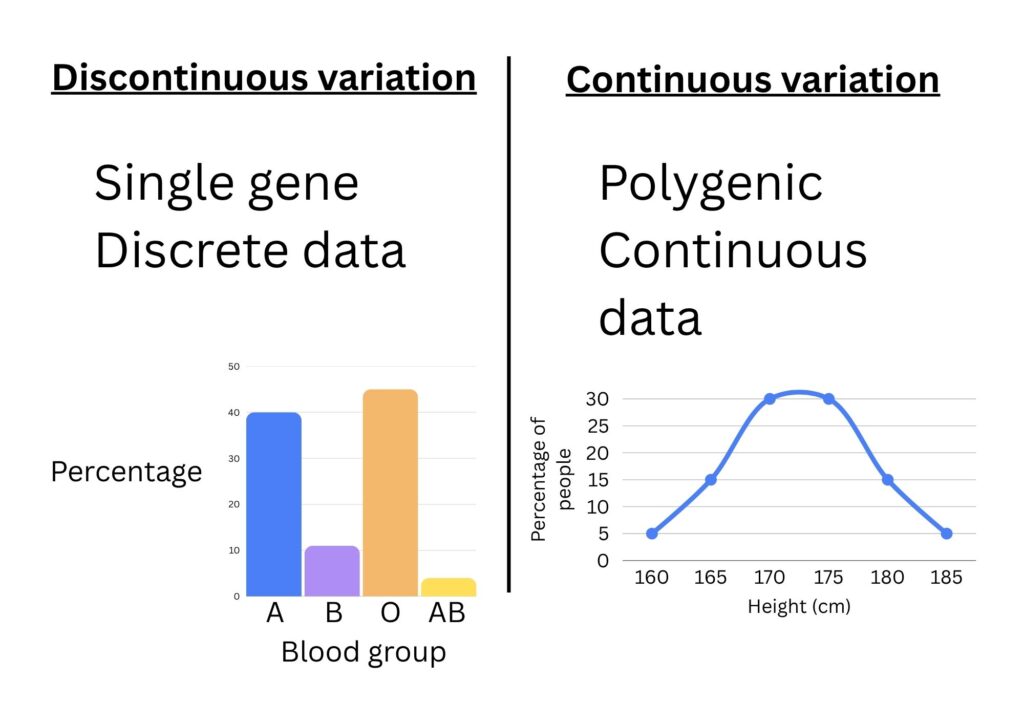
Variation can be described in two ways: continuous and discontinuous.
| Discontinuous variation | Continuous variation |
|---|---|
| Discontinuous variation shows distinct categories. | Continuous variation shows a range of values between two extremes. |
| There are no intermediate values | Individuals can have any value within the range |
| It is usually controlled by genes only | It is usually influenced by both genes and the environment |
| E.g. Human blood group | E.g. Human height |
| Data represented by a bar chart | Data represented by a normal distribution curve |
Speciation
Speciation is the formation of a new species
A species is a group of individuals that can breed together to produce fertile offspring.
Variation within a population means some individuals are better adapted to their environment. These individuals are more likely to survive and reproduce (natural selection). Over many generations, these changes can accumulate, and if populations become so different that they can no longer interbreed, a new species is formed. This process is called speciation.
Practice Questions
1.What is meant by the term variation in a population?
2.A population of rabbits lives in a forest. Some rabbits have slightly darker fur due to a genetic mutation. If the forest becomes darker over time, explain how this variation might affect which rabbits survive and reproduce.
3.A plant species shows a wide range of heights. Suggest two reasons why some plants are taller than others.
Factors affecting the rate of photosynthesis
Measuring & calculating rates of photosynthesis
Inverse square law and photosynthesis
Economics of enhancing the conditions in greenhouses
Investigating the effect of light intensity on the rate of photosynthesis
Data analysis and nervous system
The effect of a factor on human reaction time
Controlling blood glucose concentration
Regulating water and nitrogen levels in the body.
Hormones and human reproduction
Using hormones to treat infertility
Control and coordination in plants using hormones
Investigating the effect of light or gravity on the growth of newly germinated seedlings